


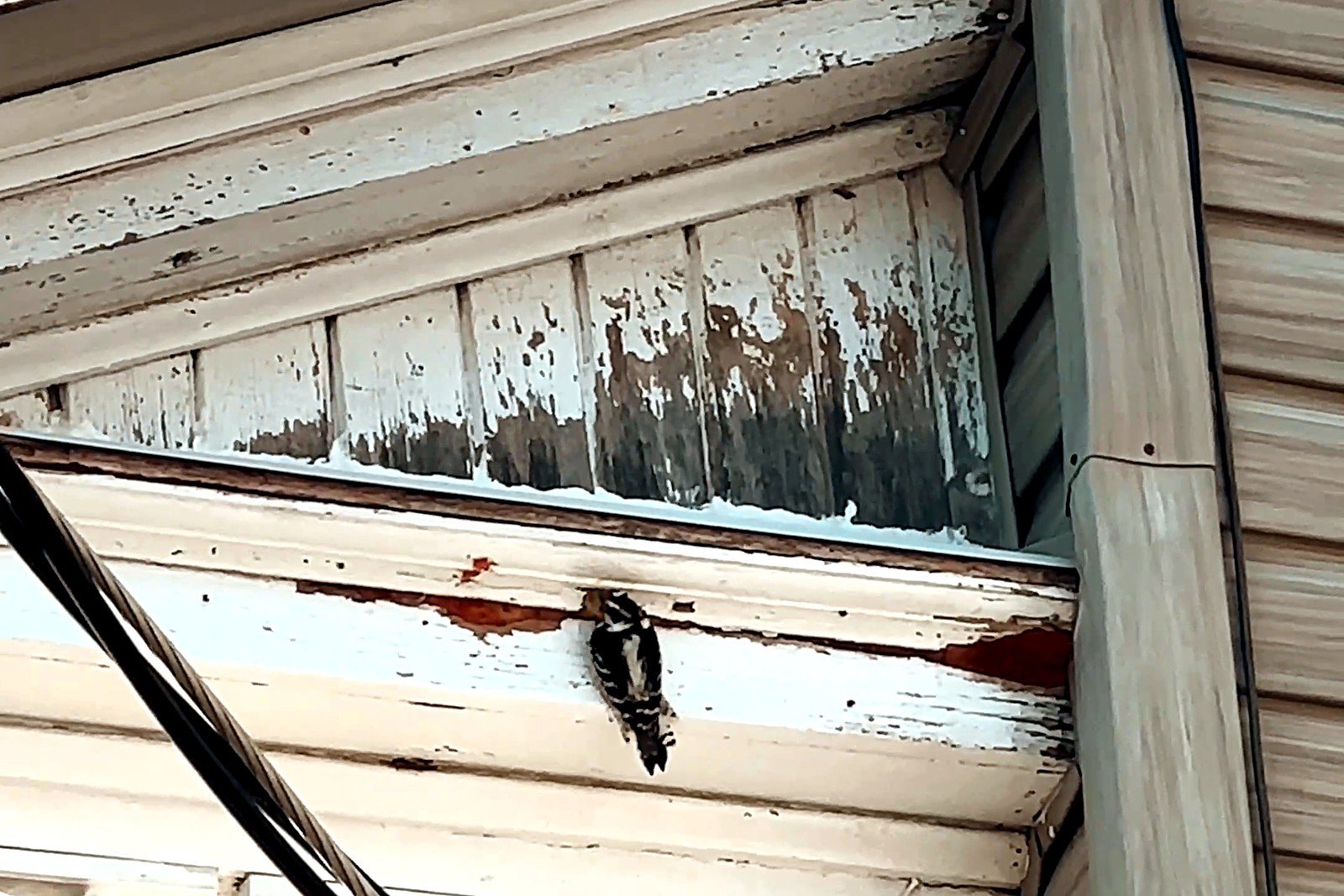
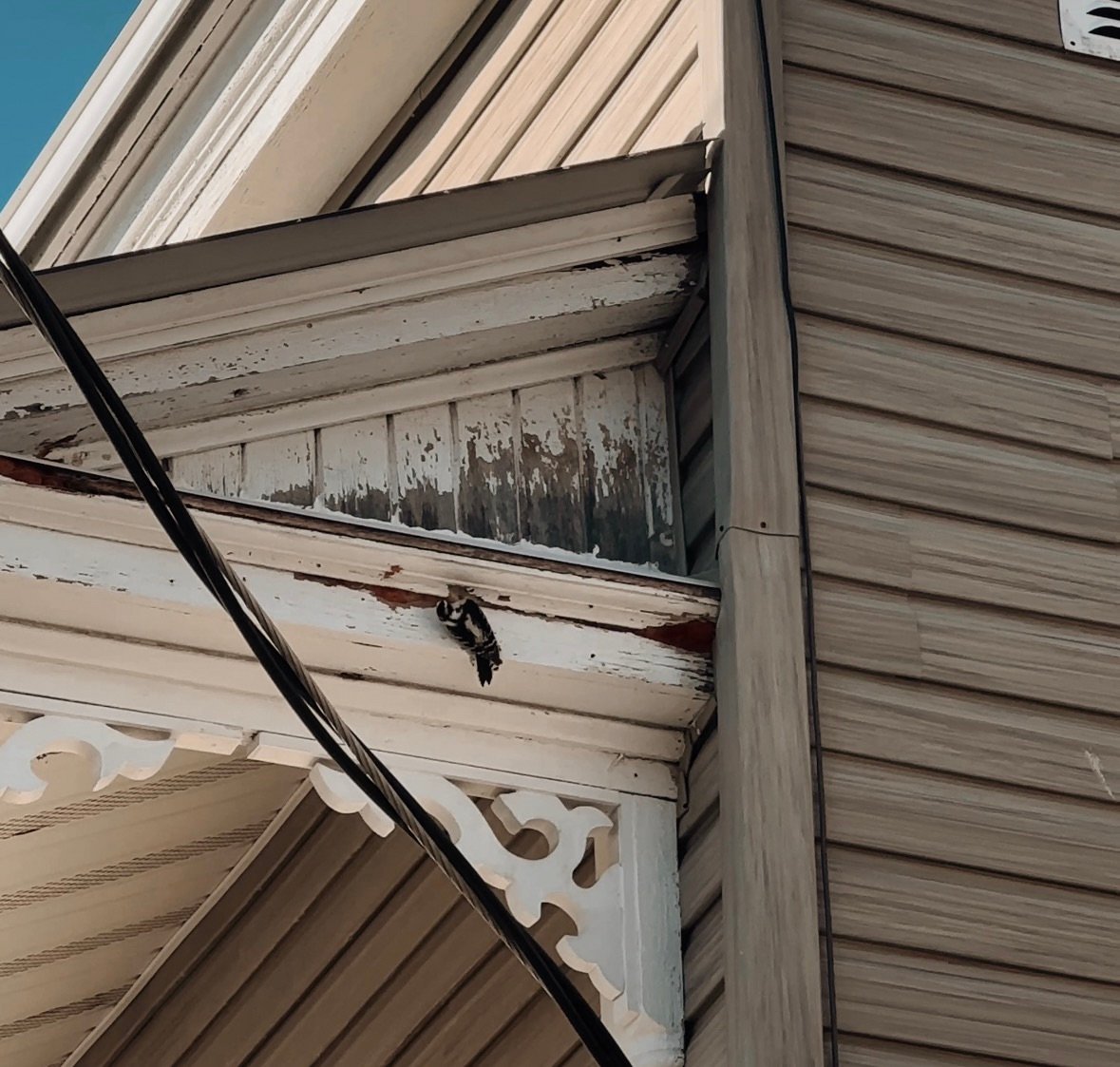
Yesterday on a walk I heard it before I saw it, a steady hammering coming from the top of a house on my street. A small downy woodpecker was working the wooden trim under the porch roof. The paint and the wood around it were stripped bare. The sound kept going, tap tap tap, in a neat and patient rhythm. That sound was my first lesson in how to stop woodpeckers from pecking your house.
I filmed it, and I stood there for a minute with my phone in my hand. The bird did not seem bothered by me at all. It clung to the trim with its feet and went back to work like it owned the place. I felt wonder and worry, because I knew that sound meant trouble if no one paid attention.
A woodpecker hammering a house usually means something. It is almost never random. If it is your house the bird is telling you something worth hearing. So here is what it means, and how to stop woodpeckers from pecking your house before the damage spreads.
Three Reasons a Woodpecker Hammers a House
I used to think a woodpecker just liked the sound of its own work. That was wrong. I learned that there are three main reasons a woodpecker hammers a house, and each one calls for a different response.
- Drumming. In spring the bird drums on hollow wood, siding and even metal to claim territory and attract a mate, and houses make excellent drums. The sound carries far.
- Food. The bird can hear and feel insects moving inside wood, carpenter ants, borers and larvae, and it pecks to get at them. If the food is good, the bird will come back to the same spot again and again.
- A place to live. A larger round hole usually means the bird is carving a roosting or nesting cavity, often in autumn before winter. It wants a safe and dry place to sleep.
I did not know which reason fit the house on my street. A loud drum in spring is one thing, and a bird that returns to the same spot in summer is another. That is how a small sound can turn into woodpecker damage to your house before you notice the holes.
The Reason That Should Worry You
Of the three reasons, the food reason deserves a second look. A bird returning to the same spot again and again often means insects inside the wood or wood gone soft with moisture and rot. The bird may be finding a problem you cannot see from the street.
I would start with a simple check in daylight when I can see the wall clearly. Tap the wood and listen for hollow spots. Look for fine sawdust below the holes. Probe gently with a screwdriver for soft wood. If the wood feels spongy or damp, I take that as a sign to get help.
When I am unsure, I call a pest control company or a home inspector instead of guessing. A pest control company can tell me if insects are living in the wall. A home inspector can tell me if moisture or rot has weakened the wood. That is why I sort the cause first, before I think about how to stop woodpeckers from pecking your house for good.
Water is often part of the story, so I also run my freeze thaw checklist each year. Water that gets into a wall in winter can soften wood and invite insects in spring. A dry wall is a harder target.
A woodpecker at your wall is rarely the real problem. Most of the time it is the messenger.
How to Stop Woodpeckers From Pecking Your House
The question I hear most is how to get rid of woodpeckers. I understand the urge, and I learned fast that you do not remove the bird at all. You make the house stop rewarding it, so the bird moves on to a better place on its own.
Woodpecker Deterrents That Actually Work
- Hang things that move and shine. Hang reflective tape, streamers or old discs near the spot, because movement is what works. A flash of light can make a bold bird think twice.
- Cover the target area with netting. Hold the netting a few inches off the surface so the bird cannot reach the wood. The gap matters, because netting pressed flat against the wall will not stop a determined beak.
- Set out a decoy owl or hawk. Move it every few days, because a statue that never moves stops fooling anyone fast. I move mine when I take out the trash.
- Cover fresh holes with hardware cloth or metal flashing. Do this once you are sure no nest is inside. A solid cover can protect the wood while you deal with the cause underneath.
- Offer an easier meal. Put a suet feeder on a tree well away from the house. If the bird can eat in peace out in the yard, it has less reason to work on your wall.
- Deal with the insects. Deterrents fail when dinner is still living in the wall, so treat the insects and fix the damp wood that drew them in.
A woodpecker deterrent only works while it keeps changing, so I move mine and I check the netting each week. If a woodpecker deterrent sits in one spot for a month, the bird learns it is harmless. Poisons and anything that harms the bird are illegal, and I explain that in the next section. A single scare tactic left in place forever fades within days.
Woodpecker Holes in Siding: What the Damage Costs to Fix
I will be honest with you. When I first saw the holes in a wall, I thought a little filler and paint would fix it in an afternoon. I was wrong, because woodpecker holes can hide soft wood, damp wood and insects.
Patching small holes and repainting trim can run a few hundred dollars with a handyman. That is the low end, and it works best when the wood underneath is still solid.
Replacing damaged trim boards or a section of wood siding commonly lands in the high hundreds to a few thousand. The final price depends on height, access and material. Matching older siding takes time, and full wall sections cost more.
I get two quotes before I agree to any big home job. Next, I ask each person to show me the damage and to explain the fix in plain words. I did the same when I looked at what a furnace replacement can cost in Canada. If climbing a ladder is no longer easy for you, my aging in place home fixes can help you plan the work safely.
How to Stop Woodpeckers From Pecking Your House Without Paying Twice
Fix the cause first, so the repair is not pecked open again. I would rather pay for the pest check now than pay for the same repair twice. That step is part of how to stop woodpeckers from pecking your house for good.
Does Home Insurance Cover Woodpecker Damage
This is the part that surprised me most. Standard home policies commonly treat animal and bird damage and gradual wear as maintenance the owner pays for, so a claim is often declined. It helped me to plan for the cost myself instead of hoping a claim would cover it.
Where it gets less clear is the damage that follows, like water entering through holes. Water can rot wood and lead to a much bigger repair. That later damage may be treated in a different way. I ask my insurer to explain that line in plain words.
I asked the same question about frozen pipes, and I learned that the wording of a policy matters more than I thought. When I looked at the basement suite checks I ran before moving my parents in, I also learned to call the insurer before I started work. Photographing everything helps, so I take photos up close and wide.
So I photograph everything and I read the policy or I ask the insurer before assuming either way. I do not assume a yes, and I do not assume a no.
This is general information, not insurance advice.
In Canada, Woodpeckers Are Protected
In Canada, woodpeckers are protected under the Migratory Birds Convention Act. It is illegal to harm, kill or capture them or to disturb an active nest. I take that seriously.
How to Stop Woodpeckers From Pecking Your House Legally
Deterrents and covering holes outside nesting are the legal route. I can hang tape, I can set out a decoy, and I can cover a hole once I know it is empty. Those steps protect my house without harming the bird.
If a bird is already nesting in the wall, the lawful move is to wait until the young have left, or contact a licensed wildlife professional. I would not guess at the timing, so I would call a professional.
If It Is Your House, Do This First
If it is your house, I would start here when I want to know how to stop woodpeckers from pecking your house, and I would do it in this order. A calm plan beats a panic.
How to Stop Woodpeckers From Pecking Your House in Seven Steps
- Watch for a day and note when and where it hammers.
- Photograph the damage up close and wide.
- Inspect the wood for insects and soft spots.
- Hang deterrents the same day.
- Cover holes only once you know no nest is inside.
- Book the repair and the pest check.
- Look again every week for a month.
That house on my street is getting a message most of us walk straight past. Now you know how to read it, and you know how to stop woodpeckers from pecking your house if it ever lands on your wall.
This article is general information about a common homeowner problem, not professional pest control, repair or insurance advice.
